A small volunteer crew, a hybrid-electric schooner and one plain question: how much plastic has reached one of the emptiest stretches of the North Atlantic? Few winters ago, found myself a member of a small team on an extraordinary mission. As a passionate adventurer with a keen focus on environmental advocacy, this journey promised not only the thrill of exploration but also a unique opportunity to witness firsthand the challenges our oceans face and the efforts being made to address them.
The trawl net comes up from the North Atlantic looking clean. It isn’t. Rinsed into a sample jar, the catch turns out to be plastic: fragments too small and too worn to say what they once were. We are many kilometres from the nearest coast, in water that looks as untouched as any on the planet.
A few winters ago I joined a small team on an expedition with Ocean Missions, a non-profit that puts volunteers to work on marine research. Our patch was the ocean between Iceland and Greenland. The brief had three parts: trawl for microplastics, count seabirds, and clean beaches that see few visitors and fewer bin bags.
I would like to thank Nikon Czech Republic for support and providing me with photo gear. <3
Under sail from Reykjavík
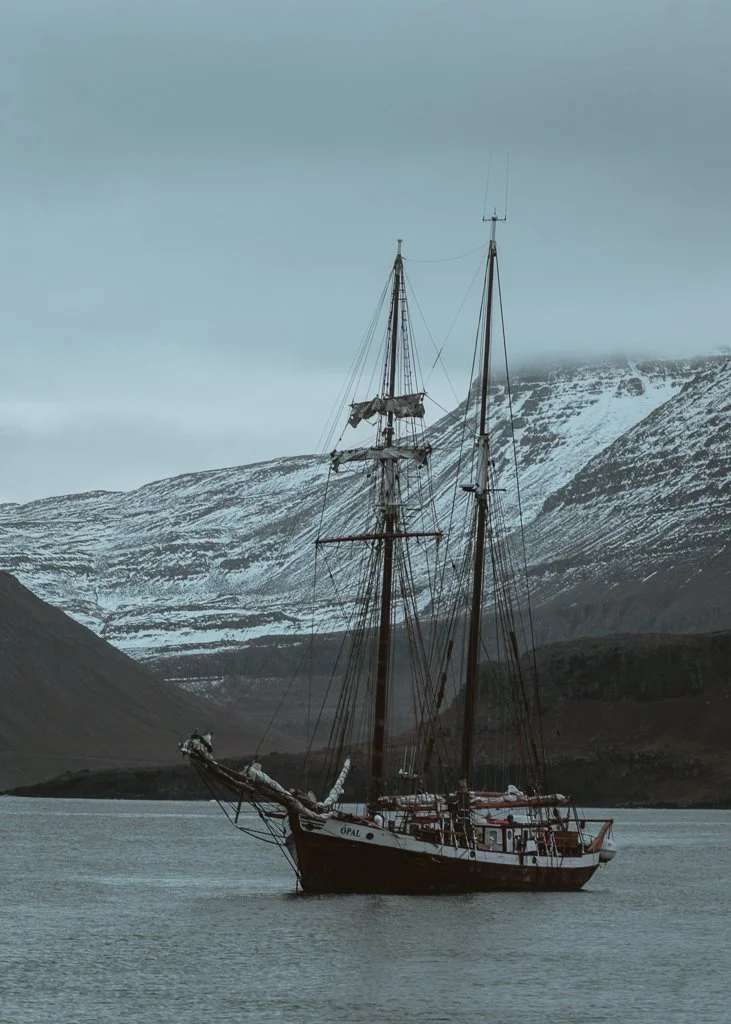
We left from Reykjavík, the world’s northernmost capital, aboard Opal, a traditional schooner fitted with a hybrid-electric engine. She was an odd mix: rigged like a ship from an old photograph, run partly on batteries. On a trip about what people put into the sea, it mattered that the boat itself burned as little as possible.
A professional crew sailed her. Scientists ran the research, and the rest of us did as we were told.

What the nets found
The trawls were routine: net over the side, a measured run, then sorting, rinsing and logging the catch. The routine never made the result less strange. Far from any shore, in deep water, the nets came back with microplastics every time.


Shore days
Every other day, with Opal at anchor, we switched to the beaches. Bags rustled and gloves snapped, then the inflatable ferried us to stretches of coast no road reaches.
We spread out along the shoreline and walked it slowly. We picked up bottle caps, knots of fishing line and plastic containers bleached and brittle from years of weather. At the end of each clean-up we measured the area we’d covered and weighed everything we’d collected. The numbers went into a global database of beach plastic, which is the point: one beach is an anecdote, a thousand beaches are evidence.
Advocating for Change: The Journey Continues

Between trawls, we counted birds. Some of the best moments of the trip were the ones nobody had scheduled. A humpback blew its spray, then breached clear of the surface. Seals lay hauled out on the shore and watched us, barely lifting their heads.
The humpback is the story I tell at dinner. The one I think about is the sample jar: clear Arctic water, full of plastic nobody could name.
The Pioneering Spirit of Ocean Missions
Founded on the principles of environmental conservation and scientific exploration, Ocean Missions is a non-profit organization dedicated to understanding, preserving, and advocating for the world's oceans. By fostering a community of passionate advocates, Ocean Missions seeks to inspire action, urging individuals from all walks of life to become stewards of the seas and champions for marine biodiversity.